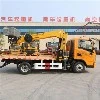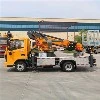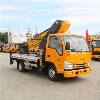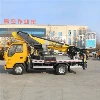
A truck-mounted crane typically consists of several key components: the chassis, travel system, luffing (boom-angle adjustment) system, hoisting mechanism, and electrical control system.
Chassis: The chassis serves as the foundation of the truck-mounted crane and includes the frame, axles, cab, and engine. It also houses various components such as hydraulic oil tanks, water tanks, fuel tanks, engine coolers, as well as an array of sensors and indicators.
Travel System: The travel system generally comprises drive wheels, steering wheels, and a suspension system. The crane's movement-including forward motion, stopping, and turning-is controlled from the cab via the steering wheel, accelerator, and brakes.
Luffing System: The luffing system primarily consists of the crane boom and counterweights. Using hydraulic cylinders or linkage mechanisms, the boom can be extended, retracted, folded, or rotated as required. Counterweights are used to enhance the overall stability and load-bearing capacity of the machine.
Hoisting Mechanism: The hoisting mechanism is the core component of a truck-mounted crane. It typically includes components such as wire ropes, pulley blocks, the boom assembly, and various control switches, enabling the lifting and transport of loads.
Electrical Control System: The electrical control system is a vital part of the truck-mounted crane; it is responsible for receiving and processing various commands and signals, while regulating, controlling, and maintaining the crane's overall operation.
Oct 13, 2026
Leave a message
Structure Of A Truck-Mounted Crane
Send Inquiry