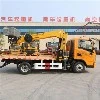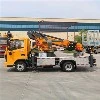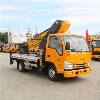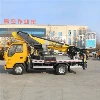
Selecting a truck-mounted crane that suits your specific requirements involves considering a variety of factors. First, clearly define your operational needs-such as the required lifting capacity (tonnage) and boom length-and research the current market to make an informed decision. Choosing a legitimate manufacturer is crucial; evaluate their qualifications, production capacity, and after-sales support. Carefully inspect the quality of the product and its components, ensure the price aligns with your budget, and select a brand based on your personal preferences. Furthermore, do not overlook aspects such as environmental compliance, energy efficiency, safety features, and after-sales service-all of which are essential for choosing the right crane.
Selecting the chassis is a critical step. Well-known, high-quality brands like Dongfeng, Jiefang (FAW), and Foton are common choices; opting for a brand with a large local presence can offer significant advantages in terms of after-sales support, maintenance, and repairs. Moreover, the chassis must be compatible with the crane's tonnage. For instance, a Dongfeng Dolika light truck is typically paired with a 3.2-ton or 4-ton crane. Different vehicle configurations support different lifting capacities: 6x2 models are generally suitable for 6–12 ton cranes, while 6x4 models can accommodate 6–16 ton cranes. Precise matching is vital to ensuring optimal vehicle performance.
Choosing the right type and tonnage of the crane also requires careful consideration. Cranes come in various capacities-such as 2, 3.2, or 4 tons-and are categorized into straight-boom and knuckle-boom (articulating) types. Straight-boom cranes are simple to operate and well-suited for outdoor high-altitude tasks. Knuckle-boom cranes, by contrast, are more versatile in confined spaces and can handle complex, multi-functional operations, though they generally come at a higher price point. Your choice should be guided by your specific working environment and operational requirements.
Finally, thorough pre-purchase inspections are essential. Verify that the vehicle possesses the necessary official product announcements, environmental compliance documentation, and 3C certification. Check for fuel consumption limit compliance, confirm that the chassis is specifically designed for a truck-mounted crane, ensure that any frame reinforcement plates are factory-installed, check that components like the muffler remain in their original positions, and examine the span of the front outriggers and the condition of the frame. To select the right truck-mounted crane, you must first determine the dimensions of the loads to be lifted and the distance from the center of the load to the center of the crane's mast. By referencing this distance against the crane's load capacity specifications, you can identify the appropriate crane size. It is important to understand that a crane's lifting capacity is fixed, and the working radius is inversely proportional to the weight of the load: a larger working radius means a lower lifting capacity, while a smaller working radius allows for a heavier load. Furthermore, ensuring that the crane's capacity is well-matched to the vehicle chassis is crucial; a more robust chassis frame (main beam) provides greater load-bearing capacity. Different brands of truck-mounted cranes each have their own strengths; manufacturers such as XCMG and Zoomlion, for instance, enjoy significant sales volume in the domestic market and are recognized for their reliable quality.
In summary, choosing a truck-mounted crane that meets your specific needs requires a comprehensive evaluation of various factors, including the chassis, the crane unit, necessary certifications, operational parameters, and the brand. Only by carefully weighing these elements can you ensure that the equipment delivers maximum performance and effectively meets your operational requirements in the field.