Usage Scenarios
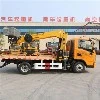
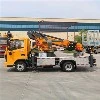
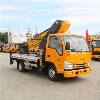
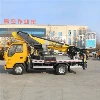
Truck-Mounted Cranes: Primarily used for material handling and installation at construction sites, docks, and warehouses; suitable for moving and lifting smaller-scale materials.
Tire-Mounted Cranes: Designed for more expansive areas-such as mines, ports, and oil fields-and capable of handling and lifting large-scale materials.
Structural Characteristics
Truck-Mounted Cranes: A type of mobile crane integrated with a truck chassis; typically composed of a truck chassis, outriggers, a slewing mechanism, a crane boom, and a hook.
Tire-Mounted Cranes: Composed primarily of a chassis, an operator's cab, a hoisting mechanism, a travel mechanism, and support outriggers.
Scope of Application
Truck-Mounted Cranes: Suited for handling and lifting smaller materials, generally with a lifting capacity of up to 10 tons; commonly used at construction sites and for municipal engineering projects.
Tire-Mounted Cranes: Designed for handling and lifting large-scale materials, with lifting capacities that can reach several hundred tons; used in environments such as mines, ports, and oil fields.
Maintenance
Truck-Mounted Cranes: Maintenance is relatively straightforward, requiring routine servicing as outlined in the operation manual-such as changing lubricating oil and checking that all components are securely fastened.
Tire-Mounted Cranes: Maintenance is more complex and involves a wider range of considerations, including monitoring tire pressure, changing engine oil, and inspecting hydraulic systems.
Conclusion
In summary, truck-mounted cranes and tire-mounted cranes differ in terms of their intended usage scenarios, structural features, scope of application, and maintenance requirements. When selecting a crane, it is essential to consider specific operational needs and site conditions to ensure the equipment is used most effectively.