Aerial work platforms are specialized vehicles designed to facilitate safe and efficient operations at heights, utilizing various structural designs and technologies to elevate personnel or equipment.
1. Scissor-Lift Aerial Work Platforms
Scissor-lift aerial work platforms derive their name from their distinctive scissor-like lifting mechanism. This structure ensures stability during elevation and allows for a high load-bearing capacity. These platforms are typically suited for indoor or outdoor use on flat, level surfaces-such as in warehouses, workshops, or construction sites-and offer a wide range of working heights, from a few meters to several tens of meters, depending on specific requirements.
2. Boom-Type Aerial Work Platforms
Boom-type aerial work platforms-which include both straight-boom and articulating (knuckle-boom) varieties-feature an extendable boom structure. This design enables operation in complex terrain or confined spaces, such as along city streets, beneath bridges, or against the exterior walls of buildings. These platforms generally offer greater working heights and a wider operational reach, making them versatile enough to meet a variety of high-altitude task requirements.
3. Mast-Type Aerial Work Platforms
Mast-type aerial work platforms utilize a multi-section vertical mast lifting mechanism. They are characterized by their compact size, lightweight construction, and ease of mobility. These units are primarily designed for low-to-medium height tasks-such as maintenance or cleaning-in indoor or outdoor settings like shopping malls, supermarkets, and airports. While their working height is generally limited to within a dozen meters or so, they maintain a high standard of stability and safety.
4. Spider-Type Aerial Work Platforms
Spider-type aerial work platforms are named for their unique, spider-leg-like support structure. This design allows the unit to remain stable on uneven ground and navigate over obstacles to reach work areas. These platforms are particularly well-suited for operations in complex, rugged environments-such as in remote wilderness or mountainous areas-where they are frequently used for tasks like power line maintenance or the servicing of telecommunication base stations. 5. Self-Propelled Aerial Work Platform
A self-propelled aerial work platform is a type of aerial work vehicle capable of moving under its own power. By combining the functions of an aerial work platform with those of a mobile vehicle, it allows operators to travel quickly between different locations, thereby enhancing operational efficiency. These units are typically suited for tasks that require frequent relocation, such as the maintenance of urban lighting or the installation of billboards.
6. Truck-Mounted Aerial Work Platform
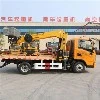
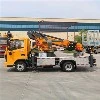
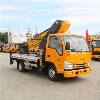
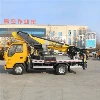
A truck-mounted aerial work platform consists of an aerial work platform installed onto a vehicle chassis. Leveraging the power and mobility of the truck, it enables the rapid transport and precise positioning of the platform. Such vehicles are generally ideal for scenarios requiring travel over longer distances or operations at multiple, geographically dispersed sites-for example, in power grid inspections or the maintenance of street lighting.