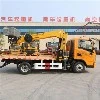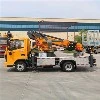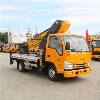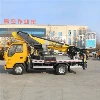
As an essential piece of equipment in modern industry and construction, the load capacity-specifically the number of people an aerial work platform can carry-is a critical factor for users to consider when making a selection.
In general, the number of people an aerial work platform can accommodate is not fixed; rather, it is determined by a combination of factors, including the type of unit, its intended purpose, structural strength, and safety standards. First, there is a wide variety of aerial work platforms, such as scissor lifts, boom lifts, self-propelled units, and vehicle-mounted platforms. Because each type is designed for different purposes and operational environments, their load capacities vary significantly. For instance, a small scissor lift-typically designed for indoor or low-altitude tasks-might be limited to 1–2 people, whereas a large boom lift, which offers a greater reach and broader operational range, may be capable of carrying 2–4 people or even more. Second, the intended application also plays a key role. Platforms designed for line maintenance in sectors like power or telecommunications may prioritize operational flexibility and safety, often accommodating fewer personnel; conversely, those used for transporting materials or personnel in construction and renovation may require more spacious platforms. Furthermore, structural integrity and safety standards are decisive factors. During the design and manufacturing process, these machines must strictly adhere to national and industry safety standards to ensure that they remain structurally stable and perform reliably when carrying the specified number of people. Consequently, even if two aerial work platforms from different brands or models appear similar, their permitted occupancy may differ based on their specific structural design and safety compliance. It is also important to note that a higher capacity is not necessarily better. Overloading a platform not only shortens its service life but can also lead to serious safety accidents. Therefore, when selecting an aerial work platform, users should carefully assess their actual operational requirements to determine the appropriate capacity and choose a model that fully complies with relevant safety standards. In practical applications, the maximum number of personnel an aerial work platform can carry is typically specified in the vehicle's user manual or on its nameplate. Before use, operators should carefully read the manual to understand the vehicle's load capacity and operational limitations, thereby ensuring safety during work. Furthermore, regular maintenance and servicing of the aerial work platform are essential measures for upholding its load-bearing capacity and ensuring safe operation.